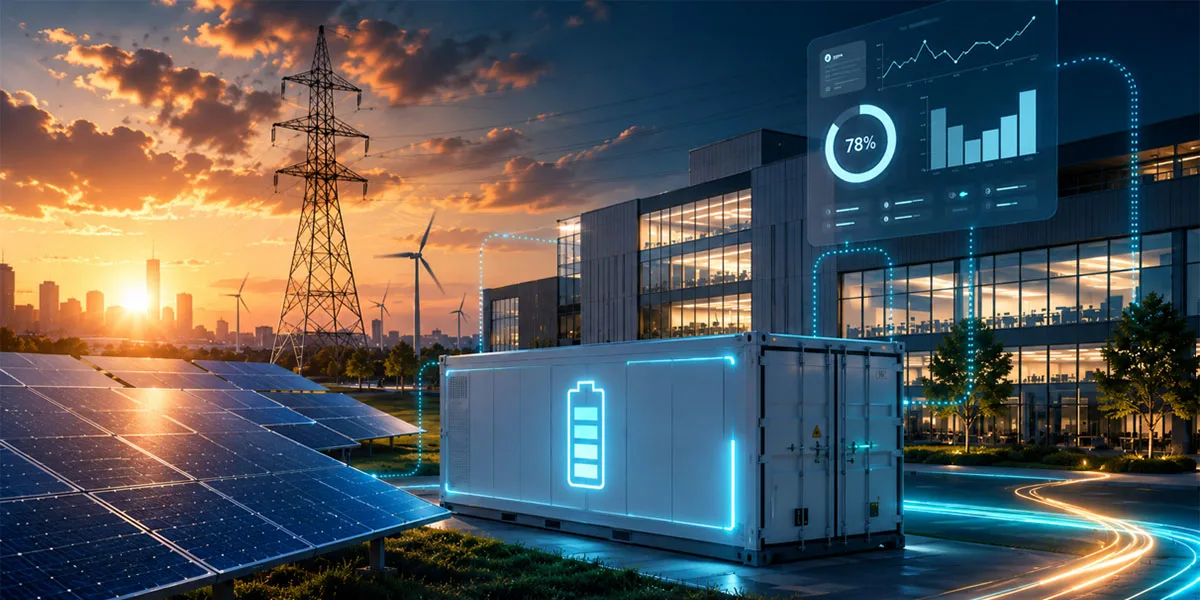
Sounak Chatterjee, Associate Vice President at Avalon Consulting, explores how India’s energy transition is shifting from renewable power generation towards intelligent energy management. With time-based tariffs, battery storage and diverse energy sources reshaping industrial power economics, smarter energy optimisation is emerging as the next opportunity.
The article examines how Energy Management Systems (EMS) can improve cost efficiency, reliability and asset utilisation while creating new business opportunities for energy players. For industrial users and energy companies, the strategic imperative is to move beyond power generation towards smarter, integrated energy solutions.
For years, India’s renewable energy story was straightforward. Build more solar and wind. Make green power cheaper. Help companies buy it through open access, captive or group captive models. Renewable tariffs fell, corporate demand rose, and green power became a real cost and sustainability lever.
Then came the next problem. Solar power is available when the sun shines. Wind power is available when the wind blows. But factories, data centres and industrial parks need power when they need power. That is why Battery Energy Storage Systems, or BESS, have become important. India may require 208 GWh of BESS by 2030.
So, the question is no longer whether storage will matter. The more interesting question is what happens after the battery is installed. A company may have grid supply, open access solar, captive renewable power, diesel backup and a battery. Each source has a different cost, availability and purpose. The best combination at 2 PM may not be the best at 8 PM. Earlier, the main decision was where to buy power from. Going forward, companies will also need to decide when to buy it, store it, consume it and shift demand. That is not simply procurement. It is an operating decision, repeated every day.
India’s tariff structure is already moving in this direction. Under the national Time-of-Day framework, peak-period tariffs for commercial and industrial consumers are to be at least 1.2 times the normal tariff, while solar-hour tariffs are to be at least 20% lower. Maharashtra offers an early example. Since July 2025, MSEDCL’s daytime tariff concession has reportedly delivered Rs 2,235 crore of benefits to nearly 70 lakh consumers. Industrial consumers accounted for Rs 1,774 crore. The concession applies between 9 AM and 5 PM, when solar power is more available.
This shows that timing itself has economic value. Without storage, a company can shift flexible activities to cheaper hours. With storage, it can also shift energy across hours.
Yet similar assets can deliver different outcomes. One company may use its battery largely as backup. Another may also use it to manage tariff windows, renewable availability, peak demand and diesel dependence. The difference comes from how the energy system is managed.
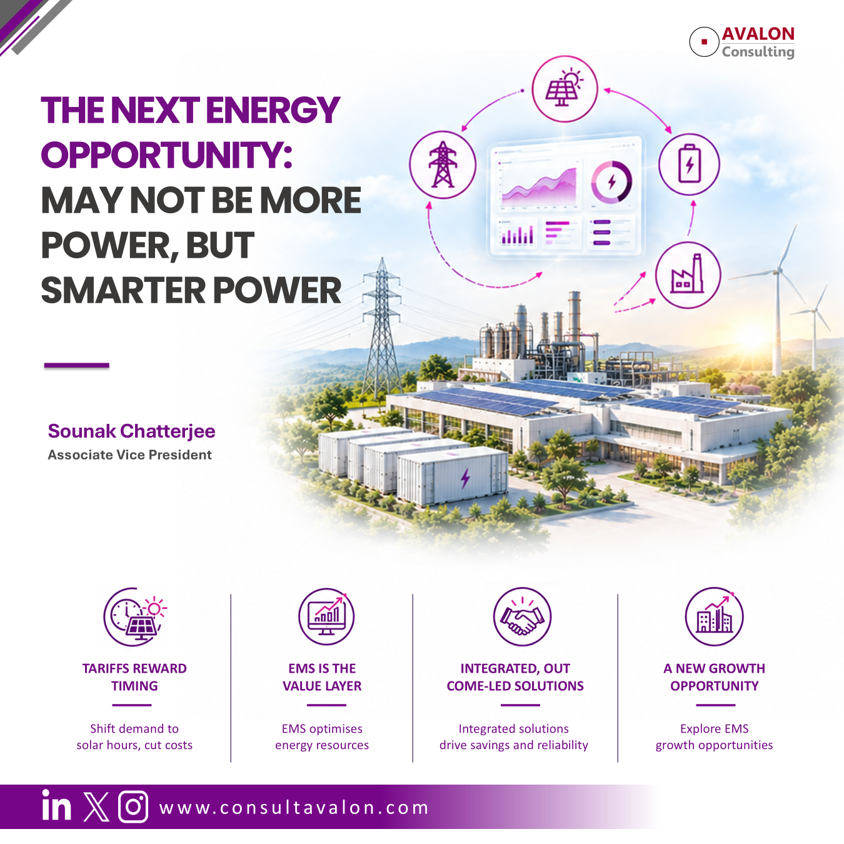
This is where Energy Management Systems, or EMS, enter the picture. An EMS uses data and software to decide how grid power, renewable supply, storage and flexible loads should work together. That could make EMS one of the market’s most valuable layers.
Renewable developers, EPC firms and BESS integrators earn when an asset is installed. An EMS platform can remain involved throughout its life, continuously improving operating decisions. This creates recurring revenue, a deeper customer relationship and valuable operating data. Over time, the EMS provider may understand a customer’s load behaviour, tariff exposure and asset performance better than an equipment supplier. It may also influence which assets are added next.
But not every EMS company will capture this value. A dashboard that only reports energy use is unlikely to become the control point. Stronger platforms will need to integrate equipment from different suppliers, work across tariffs and operating constraints, prove savings and take responsibility for outcomes.
This could also change how solutions are sold. Most industrial users may not want renewable power from one vendor, a battery from another, software from a third and financing from a fourth. They may prefer an integrated partner paid against savings, reliability or another agreed outcome.
A similar model is emerging through virtual power plants, or VPPs. A VPP uses software to coordinate batteries, electric vehicles and flexible loads as one system. The principle is similar: value comes not only from having assets, but from deciding how and when they should be used together. The US Department of Energy estimates that VPPs could reach 80-160 GW by 2030, address 10-20% of peak load and save around US$10 billion annually in grid costs. India may get there eventually. Its immediate opportunity is likely to be customer-side optimization, where savings and reliability can be measured.
For C&I users, the question is where optimization can create the most value and how that capability should be procured.
For renewable developers, BESS integrators, EPC companies and other energy players, the question is more fundamental. As value moves from installing assets to managing them intelligently, should they remain project providers or move into the EMS and managed-energy layer?
The answer will depend on where future value pools emerge, whether the company has a credible right to win, and which capabilities it should build, partner for or acquire. Commercial models could range from customer-owned systems to managed services and shared-savings contracts.
The next phase of India’s energy transition may change not only how power is managed, but also who owns the customer relationship and captures margin across the value chain.

Sounak Chatterjee
Sounak Chatterjee is an Associate Vice President at Avalon Consultingwith over 5 years of experience across growth strategy, market entry, diversification, commercial due diligence and performance improvement. His work spans sectors including energy, mobility, industrial and consumer businesses, with a focus on identifying new value pools and translating them into practical growth strategies.