
Harsha Kamepalli, Senior Consultant at Avalon Consulting, contributed his perspective on “Interconnectors: Feasible Solution for Grid Congestion?” submitted as part of Cordence Worldwide’s “The Insight Initiative,” a global blog and position paper competition for young consultants in the YPN network.
He highlights how interconnectors are becoming a critical enabler for relieving grid congestion, integrating higher levels of renewable energy, and improving overall system flexibility as electricity demand rises globally. He outlines the key advantages of interconnectors—from reducing curtailment and smoothing renewable variability to enhancing market efficiency, supply security, and regional development and discusses the major risks that influence large-scale deployment, including high capital costs, geopolitical dependencies, competition from storage solutions, and regulatory complexities.
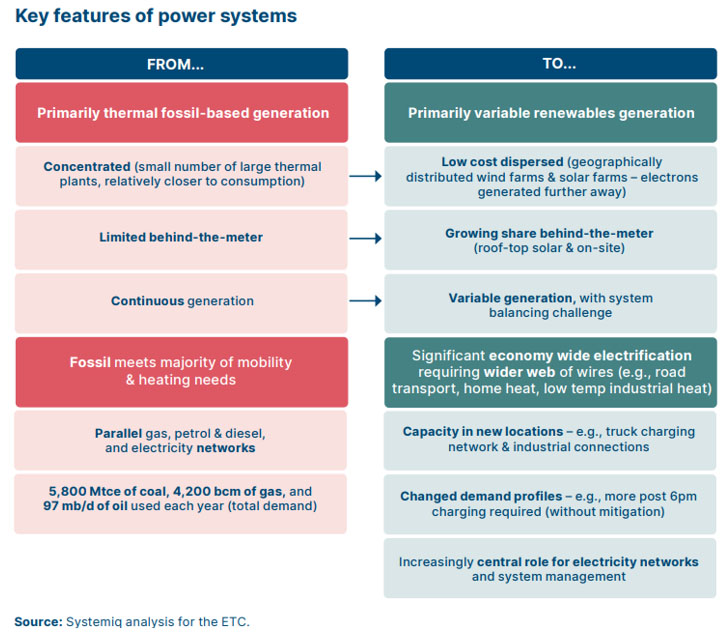
Power systems around the world are undergoing significant transformation. There is significant growth in electricity demand which is being driven by rising use in industry, greater consumption for electric cooling and heating, the deployment of electric vehicles, the expansion of data centers, etc. To service the increased demand for electricity, with decarbonization & sustainability as prime drivers, governments across the world are turning towards variable renewable sources for rapid electricity generation. These changes will necessitate a more flexible and robust system for transmission and distribution. The current electrical grids are not well equipped to accommodate the dispersed renewable energy sources and service the current demand. Interconnectors help regions worldwide in alleviating grid congestion and achieving their decarbonization targets. While many challenges affect and delay the development of transmission infrastructure, and the deployment of non-wires alternatives such as battery energy storage systems may threaten the financial viability of these investments, governments across the world will continue to invest in interconnectors projects.
Electrical Grid Congestion & its impact:
With energy transition accelerating rapidly, electrical grids play a crucial role in connecting power generators and end users, electricity transmission and distribution, and balancing supply and demand. The existing grids across the world were not built to accommodate all the distributed renewable energy that is now being generated on windy and sunny days, or to supply all the new demand from data centers and industries, and EV charging stations. Grid congestion occurs when the current grid is incapable of safely transferring electricity from a generator to an end user. This bottleneck causes long waiting times for new connections, which slows down the energy transition and affects the economy overall.
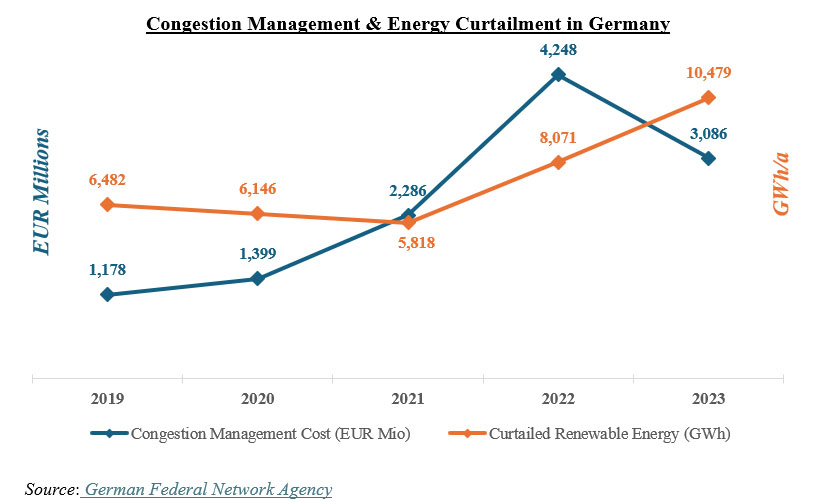
In 2023, TenneT, the Dutch transmission system operator, spent €278 million on grid congestion management, although this is partly due to higher energy prices. Similarly, Germany incurred €3 billion on managing the grid congestion issue in 2023 and a curtailment of 10.5TWh of renewable electricity. While the costs could be partly inflated due to the prevailing high energy prices, the high cost of grid congestion management in recent years indicates the scale of the problem. In addition to the direct costs for congestion measures, there are indirect costs where new connections are delayed.
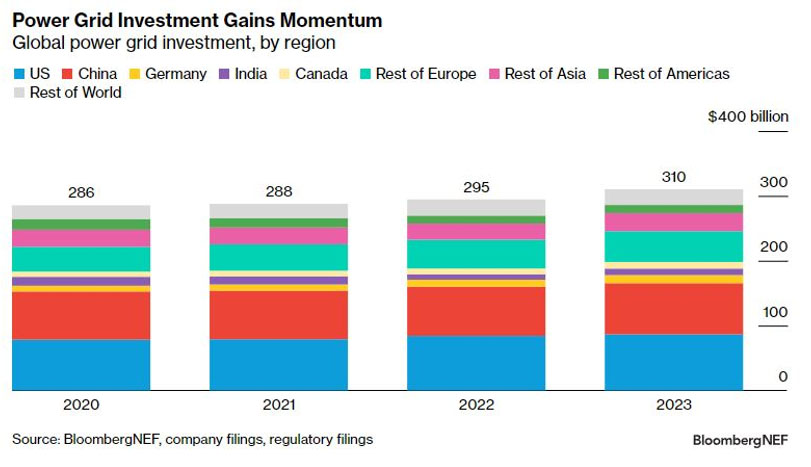
In 2023, $310 billion was invested in the global power grid infrastructure to reduce the grid congestion issue. US led the pack by investing $87 billion, followed by China at $79 billion, EU at $60 billion, and India at $10 billion.
Interconnectors and their role in alleviating Grid congestion:
Interconnectors are high-voltage land, sub-sea, or overhead electricity cables that connect the electricity grids across different regions, enabling the flow of electricity. They enable the trade and sharing of electricity, particularly renewable energy, and provide a more reliable and secure energy supply during phases of high demand. Interconnectors are beneficial when countries are looking to decarbonize and increase reliance on renewable energy. Electricity generation through renewable sources like wind and solar energy is volatile in nature and an inconsistent source to meet the grid’s energy requirements. Phases of under-supply can cause fluctuations in the grid, resulting in disruptions and power outages. Balancing the grid is a necessity.
While solutions such as industrial-scale battery sites and other storage technologies can be used to support the grid’s electricity supply, interconnectors can be a cost-effective solution.
Interconnections are expected to play a significant role in increasing resilience and making the grids cleaner. Countries worldwide are investing significant amounts of capital in developing the interconnection systems.
Few notable interconnector projects, (Non-Exhaustive)
| Project Name | Countries Involved | Length | Transmission Capacity | Transmission Mode | Budget Estimated |
| NordLink | Norway – Germany | 623km | 1400MW | Combination of sub-sea and Land | ~€2.0 billion |
| Celtic Interconnector | Ireland – France | 575km | 700MW | Sub-sea HVDC (with land sections) | ~€1.6 billion |
| Elmed-TunIta | Tunisia – Italy | 220km | 600MW | Sub-sea HVDC | ~€0.85 billion |
| Saudi Arabia Egypt HVDC | KSA – Egypt | 1,350km | 3,000MW | Overhead & sub-sea HVDC | ~$1.8 billion |
| Sumatra Java | Indonesia | 550km | 3,000MW | HVDC, overhead and submarine | ~$2.1 billion |
Advantages & Benefits of interconnectors:
- Harnessing High Renewable Energy Potential & reduction in RES-E curtailment:
Interconnectors enable the integration of regions with abundant renewable energy sources (RES-E), often located far from consumption centers
- Smoothing Variability of Renewable Generation:
Interconnectors between regions help address the inherent variability (fluctuations) in generation of electricity from renewable sources. It reduces the overall impact of localized weather changes. Leveraging time-zone diversity aids in balancing demand and supply owing to the difference in the peak demand hours
- Improved Cost Efficiency & Market Integration:
Intercontinental and intracontinental interconnectors facilitate the distribution of affordable generation capacity across wider regions, enhancing overall cost-effectiveness in generation
- Supporting Growing Demand and Regional Development:
Regions with rapidly expanding electricity needs can leverage available capacity from interconnected areas. This approach can alleviate the pressure of investments and promote economic growth by attracting foreign investment in renewable energy initiatives and enhancing collaboration among regions
- Enhancing Security of Supply and Price Stability:
Enhanced interconnectivity boosts supply variety and dependability, which may reduce price fluctuations and offer consumers more consistent electricity costs
- Bypassing Weak Local Grids in Some Cases:
Connecting directly to renewable resource-rich regions can avoid reliance on local underdeveloped grids, but typically, strengthening the local grid is required to accommodate substantial interconnector traffic
Risks & Challenges with interconnectors:
- High investment costs and financial risks:
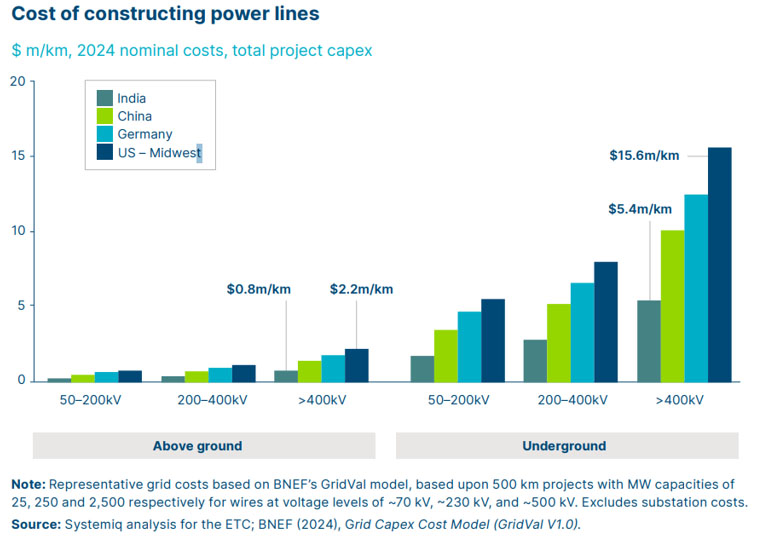
Connecting regions through long-distance and subsea cables demands substantial financial investment, and the volatility associated with development, technology, and market conditions increase financial risks. The cost of the inter-continent interconnectors can cost the countries billions of dollars over extended periods of time.
The chart below represents the cost of constructing power lines across different geos:
- Supply dependency and geopolitical risks:
Geopolitical tensions between countries could lead to supply disruptions like those associated with fossil fuel imports. They can act as a double-edged sword where the energy surplus party can politically influence energy sharing
- Competition with decentralized renewable energy:
Growing preference for decentralized renewable systems may reduce the economic viability and political support for large interconnector projects. Societal concern that by utilizing distant RES-E for import purposes could be considered a ‘sell-out’ of local resources which could otherwise be used for the domestic market
- Storage vs Interconnector trade-offs:
Energy storage could be a competing or complementing option to interconnectors to regulate unpredictability, although the exact role of storage in a worldwide interconnected system remains unclear and needs further investigation. Batteries have proven effective in solving transmission and stabilizing electricity prices. This poses a significant financial threat to interconnector investments
- Regulatory and market integration challenges:
Market operations and regulatory alignment required for effective interconnector utilization are complicated by regional variations in power market architecture, insufficient information sharing, and a lack of regionally consistent carbon pricing
- Environmental, Geographic, and Technical Implementation Barriers:
Project viability is further complicated by the physical route issues such as subsea depth, topography, and environmental effects, as well as technological limitation of existing HVDC cable
Conclusion:
Intercontinental / Cross border interconnectors will play a crucial role in catering to the growing demand for cleaner and more affordable electricity. They are integral to achieving the grid decarbonization targets and fulfilling the consumption demand across the globe. Many challenges affect and delay the development of transmission infrastructure, and the deployment of non-wires alternatives such as battery energy storage systems may threaten the financial viability of these investments. Despite the challenges, investments in interconnectors development are expected to continue with Europe expected to build a total exchange capacity of 15% by 2030.

Harsha Kamepalli
Harsha Kamepalli is a Senior Consultant at Avalon Consulting, specializing in strategy development and performance improvement. With over five years of experience across India and Saudi Arabia, he has worked on engagements spanning FMCG, Capital Goods, ICT Services, and Agricultural Commodity Trading sectors, helping clients develop and translate strategic intent into measurable business outcomes.