
Priyabrata Mohapatra, Senior Consultant at Avalon Consulting, shared his perspective on “How digitization and AI are transforming the power and utilities sector,” submitted as part of Cordence Worldwide’s “The Insight Initiative,” a global blog and position paper competition for young consultants in the YPN network.
He highlights how digitization and AI can modernize legacy power systems, improving efficiency and reducing losses. He points to simple innovations like UPI bill payments and larger initiatives like the India Energy Stack that enhance transparency and interoperability. He also notes how AI-driven tools such as smart meters, home energy automation, and predictive outage management can lower costs, improve reliability, and create a better experience for end users.
The power and utilities sector has achieved new records but not on a brighter side. Global energy supply increased by 2% in 2024 whereas we have collectively achieved a new record of 40.8 gigatons of CO2 emissions which is such an alarming figure making us take backward steps from our sustainability and emissions goals. Renewable such as wind and solar have witnessed a 16% increase but however fossil fuels still dominate the field of energy generation contributing to ~85% of power generation around the world. Electricity consumption increased by 4%, surpassing the growth rate of overall energy needs, which is a good sign that the world’s energy system continues to transition towards more electrification. For the past decade, installation of generation stations has been averaging 2.6% growth per year which is around double the rate of energy consumption in the world.
However, the demand for energy will be increasing which is a universal fact but a majority of the power plants around the globe still use legacy systems and setups which leads to huge amount of unplanned power losses, lower efficiencies and higher unaccounted contribution to global emissions. For example, legacy systems are prone to several malfunctions which may lead to incomplete combustion of fossil fuels which may lead to higher emissions of pollutants (CO2, NOx, etc.). Legacy systems also cause maintenance woes for the power plant owners bleeding into their unnecessary costs and impacting their margins.
In the recent time, the buzz of digital transformation and IOT have opened a world of opportunities for continuous monitoring, optimizing the power plant performance to fullest and leveraging advanced data science and AI in numerous key areas such as predictive maintenance, emission control, improved thermal efficiency and a lot more. Conceptually speaking there are numerous opportunities where digitization can be implemented and leveraged to their full potential in power/utilities sector. This blog however delves into specific use cases based on personal experiences and explores how some specific use cases could grown in the future which not only would help the power company but will also create a value add for the end consumers as well.
UPI Integration for utilities bill payments in India – a simple use case
The transactions scenario in India was revolutionized by UPI (Unified Payments Interface) which allows users to pay simply by scanning QR codes, setting mandates, online payments directly from their bank accounts in a highly secure way without the hassle to keeping cash or physical payment cards. The same has been implemented for energy and utilities bill payments where the customers don’t even need to go to the physical offices or create a login in the utilities website which again ironically deploys legacy systems in their backend. Just enter your consumer ID in any of your UPI apps, you will get due notifications for bill payments, you can pay bills in a few seconds and ensure a continuous power supply for your home or your small business. The reason of mentioning this use case is that we don’t need concepts resonating to rocket science to observe the impact of digitization in utilities and power, it is already taking shape around us and now I can keep paying my electricity bills from anywhere around the world.
India Energy Stack – A glimpse to the future
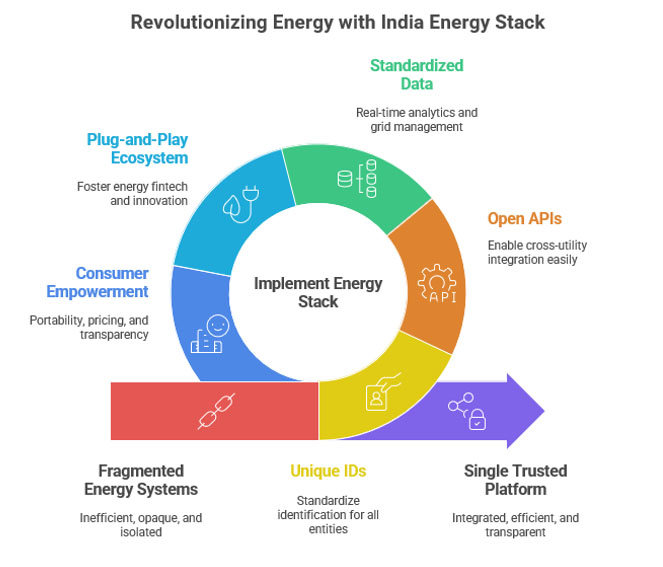
The India Energy Stack (IES) is an innovative form of Digital Public Infrastructure (DPI) aimed at reshaping India’s power sector akin to how Aadhaar and UPI transformed identity and finance systems. Presently, the sector is dysfunctional, as utilities in India work in silos and there is an absence of data interoperability. Additionally, there are no unique identifiers for consumers or physical assets. IES solves these problems by providing unique digital IDs, unique identifiers, open APIs and standardized data protocols to interlink all generation, transmission and distribution actors on a single platform.
The Utility Intelligence Platform (UIP) on IES further allows for system integrations, real-time analytics and stimulates innovation on renewable energy integration, dynamic tariffs, green energy certificates and peer-to-peer energy trading. Through this plug-and-play system framework, consumers will gain energy service portability across DISCOMs, transparent and customizable billing, and tailored energy plans. Utilities will gain greater operational and demand-side management efficiency, as well as more policy flexibility and agility. Through IES, new interoperable digital and energy systems will be established, enabling further innovation on energy fintech, virtual power plants and demand response. IES is currently in testing phase as the government will be running a 12-month POC before running the pilot.
Leveraging AI and advanced data analytics – Boon for end-use customers
We have numerous blogs, articles and papers online which has very beautifully covered the leveraging advantages of AI and digitization in the power industry for the energy/utility firms around the globe, it will help in minimizing maintenance costs, ensure optimal burning and reduced pollutant emissions, improve efficiency and many more. This section however intends to highlight how digitization and AI can benefit the end – users of power and utilities.
- Smart Metering:
Overview: Users receive accurate and real-time feedback on their energy consumption with AI-powered smart meters and advanced metering infrastructure (AMI).
Benefits for Users:
- No more estimated billing. You are charged based on what you consume
- Becoming aware of consumption trends helps reduce usage by around 3 to 5 percent
- Empowers shifting usage to lower demand times to benefit from dynamic pricing
Impact: Customers save on their bills and manage their energy habits while aiding in efficient grid management.
- AI powered energy automation:
Overview: AI incorporation into smart home devices (HVAC systems, water heaters, electric vehicle chargers) ensures their functionality is precisely tuned to real-time weather updates, room occupancy, and relevant tariff rates.
Benefits for Users:
- Minimizes Offsetting — smart systems operate appliances for the minimum power fee periods
- Sustains user comfort and satisfaction alongside lower energy costs
- Facilitates integration with home solar systems and batteries for maximum solar self-consumption
Impact: Provides advanced energy efficiency and sustainability features with no effort on the user side, maintaining user-friendliness and unobtrusiveness
- Outage Management
Overview: The AI algorithms applied by utilities for predictive diagnosis have made it possible to foresee outages by analyzing historical patterns, health of the equipment, and weather forecasts, where failures are likely to occur
Benefits for Users:
- Improved restoration times for critical services and appliances at home and at work
- Reduced frequency and duration of outages
- Restoration of power outages becomes quicker
Impact: Factors such as reduced outages enhance the reliability of power supply and minimize disruptions to the daily life and operations.
Conclusion:
Digitization and AI are no longer distant possibilities—they are actively reshaping the power and utilities sector; from seamless bill payments to nationwide infrastructure like India Energy Stack and intelligent home energy management. By modernizing legacy systems and enabling smarter and consumer-focused solutions; we can achieve higher efficiency, reliability and sustainability ensuring that both utilities and end users benefit in this evolving energy landscape.

Priyabrata Mohapatra
Priyabrata Mohapatra is a Senior Consultant at Avalon Consulting. He is a consulting professional with over 6 years of diverse experience in Go-to-Market Strategy, Growth Strategy, Performance Management, Governance & Compliance and Operational Excellence in diverse sectors such as manufacturing, automotive, IT BPO, metals & mining.